
Likert Scale
Measure agreement, satisfaction, or intensity on a defined scale (e.g. 1–5 or 1–7).
Example How satisfied are you? 1 = Very dissatisfied … 5 = Very satisfied
The survey page is where you build your questionnaire. Below are the key features and tools available to you.
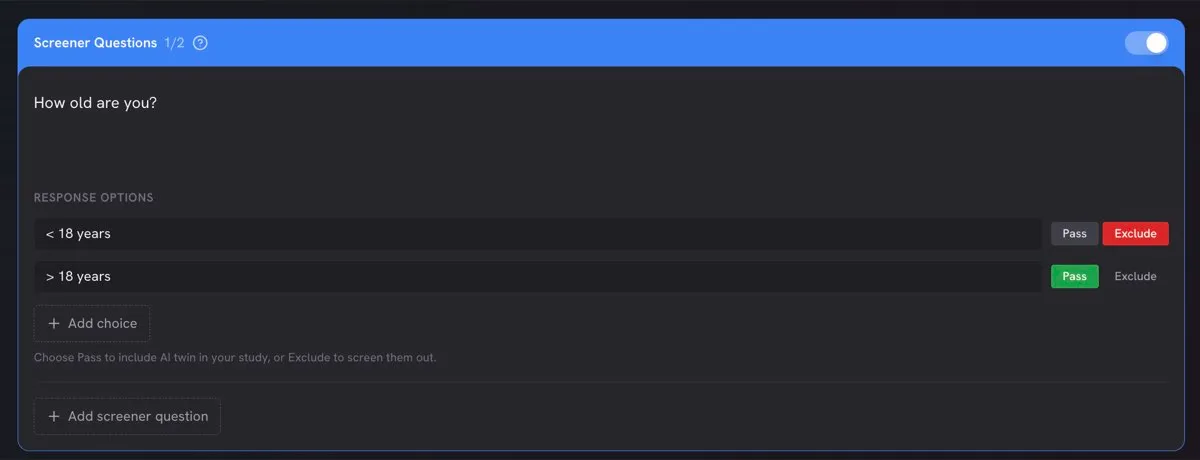
Include screeners to impose restrictions on your sample. A screener sits at the very start and filters out twins that don’t match your target audience. Mark each response option as Pass or Exclude. You can add up to 2 screener questions.
Instruction blocks allow you to provide twins with additional context, define a situation, or guide how they should approach the questions that follow. Instructions are shown to the twins but are not answered or displayed as questions in the results.
When you create a new twin sample, the instructions become part of the core context used to create the twins.
When you reuse saved twins, newly added instructions work more like directions that guide how the twins should answer the questions in the new study.
The position of an instruction block matters. Its context applies to the questions placed after it in the study.
For example, an instruction placed before a concept evaluation can establish the situation in which the twin encounters the concept:
The questions below this instruction will be answered within that context.
If an instruction block is placed at the very end of a study, there are no following questions for it to contextualise. When creating new twins, the instruction may still influence how the twins are formed, but it will not provide context for any answers.
By default, twins continue to consider previously provided context when answering later questions. When an instruction should apply only to a particular part of the study, clearly define its scope within the instruction itself.
This is especially important when a study contains multiple scenarios, topics, or evaluation tasks. Explicitly stating where an instruction starts and ends helps prevent the context from influencing questions where it is no longer relevant.

Elaiia supports a range of question types. Choose the type that best fits what you’re trying to measure.
Likert Scale
Measure agreement, satisfaction, or intensity on a defined scale (e.g. 1–5 or 1–7).
Metric
Collect a single numeric value — prices, quantities, frequencies.
NPS
Net Promoter Score — the standard 0–10 recommendation likelihood question.
Choice Frequency
How often does the respondent choose, use, or encounter something?
A/B Test
Present options side by side and ask twins to pick a winner.
Idea Generation
Open-ended creative prompt — twins brainstorm or generate new ideas.
Concept Evaluation
Show a concept and collect structured feedback — appeal, intent, likes and dislikes.
Rank Order
Ask twins to rank items by preference, importance, or priority.
Usage Exploration
Explore how, when, and why people use a product or service.
Matrix Coming Soon
Rate multiple items on the same scale in a single grid.
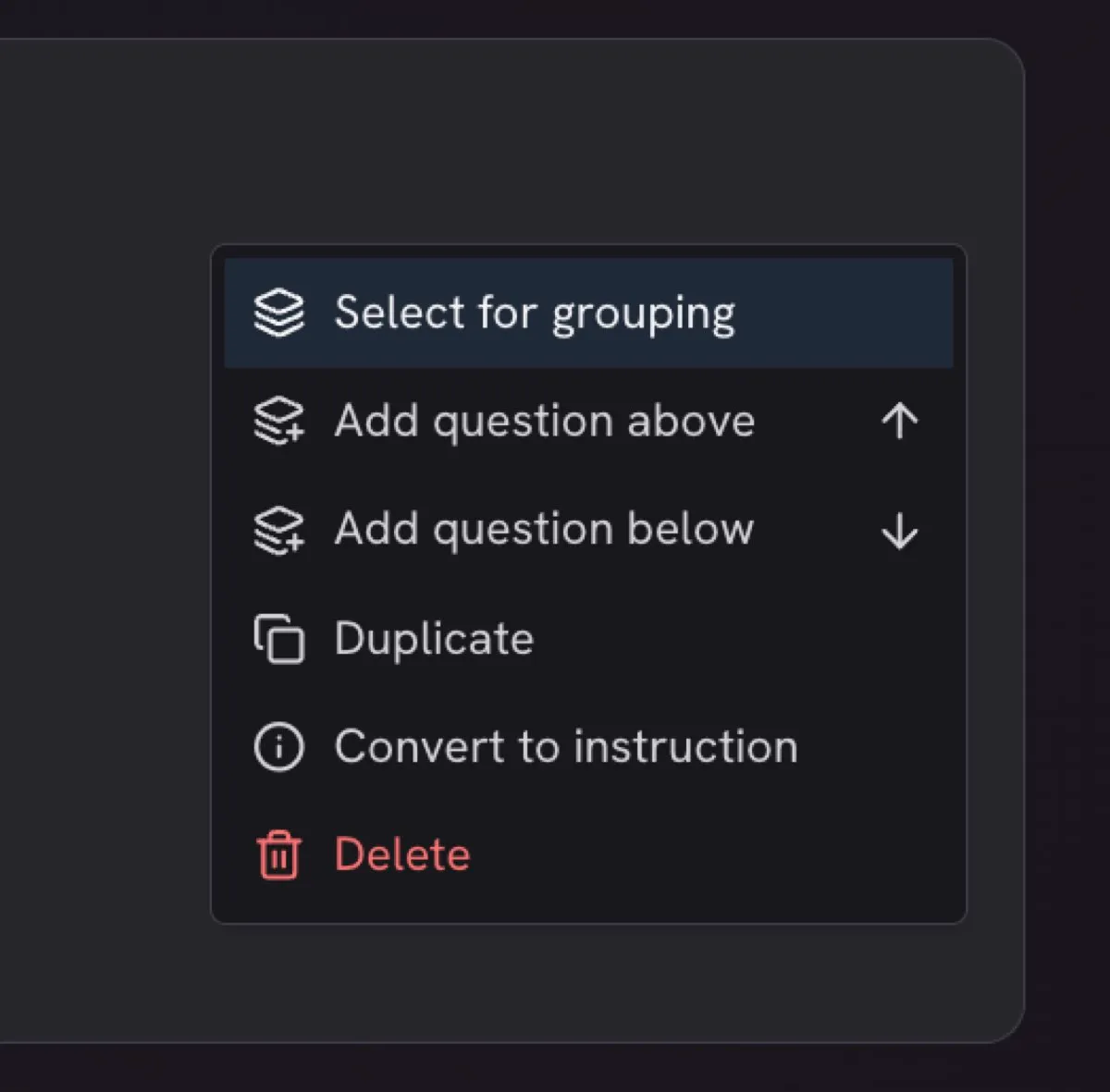
To randomise questions, create question groups. Right-click on a question or use the context menu.
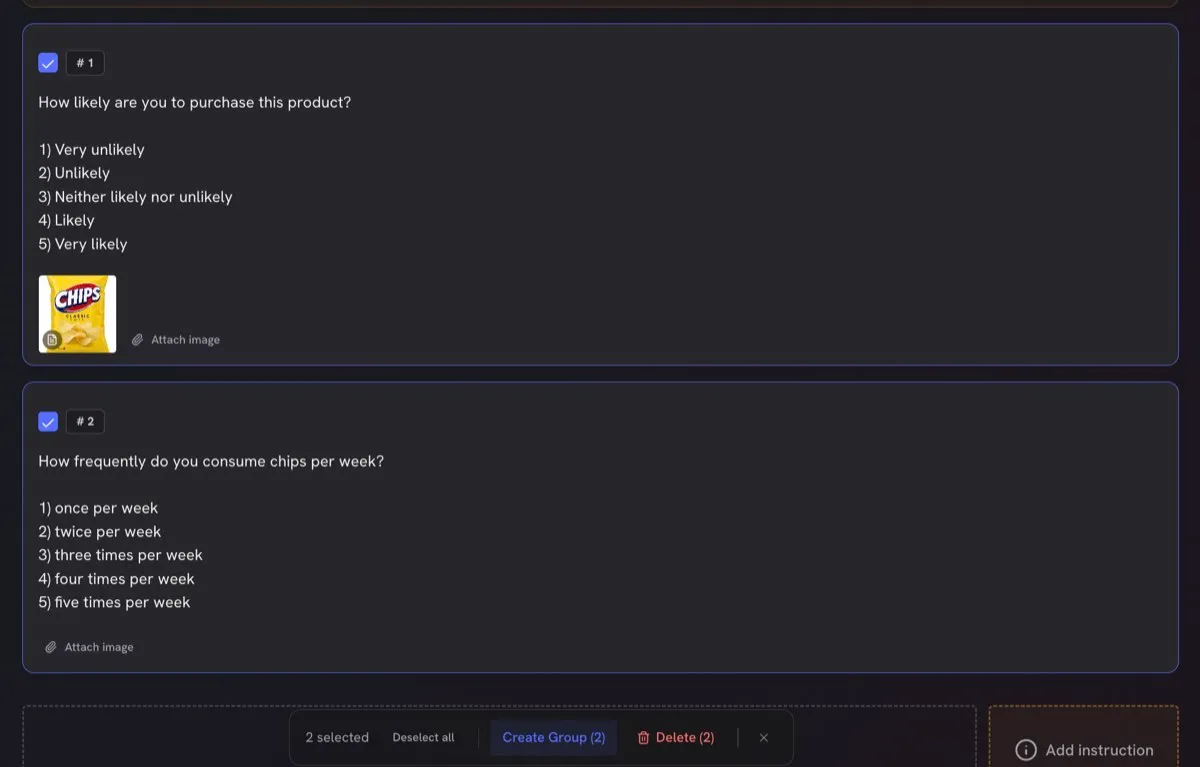
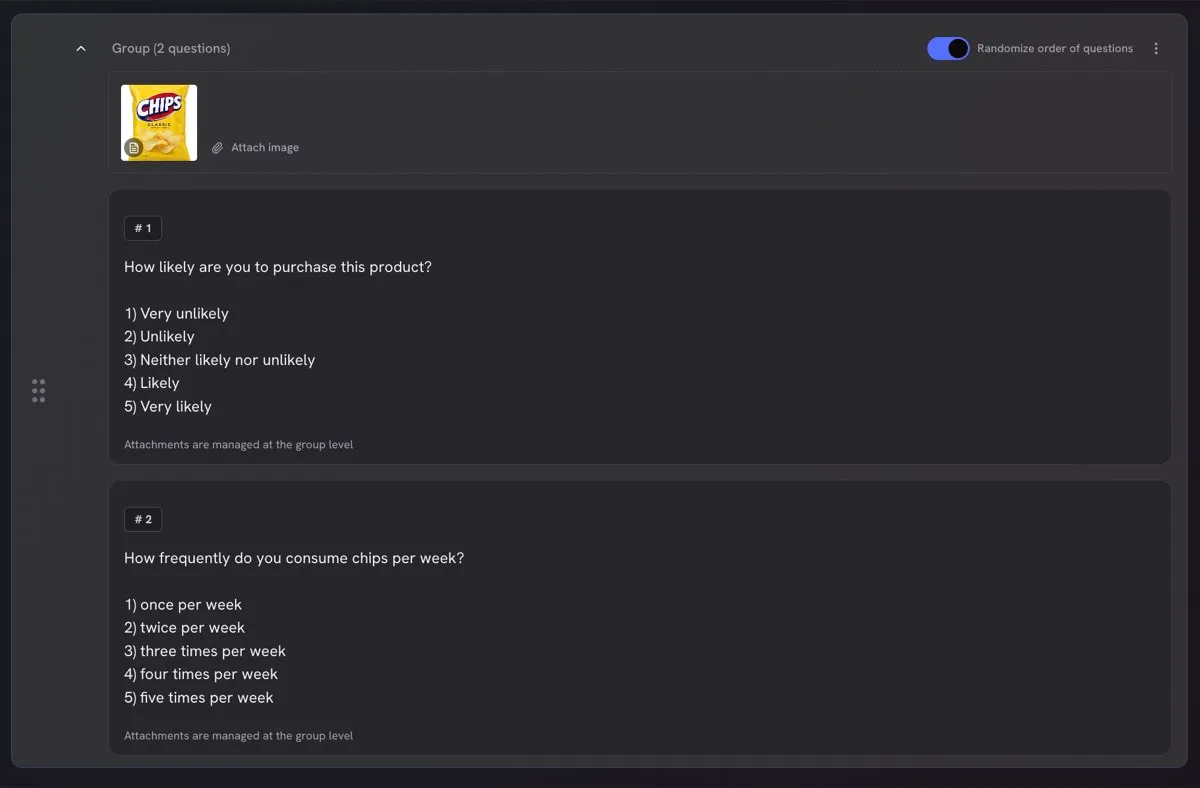
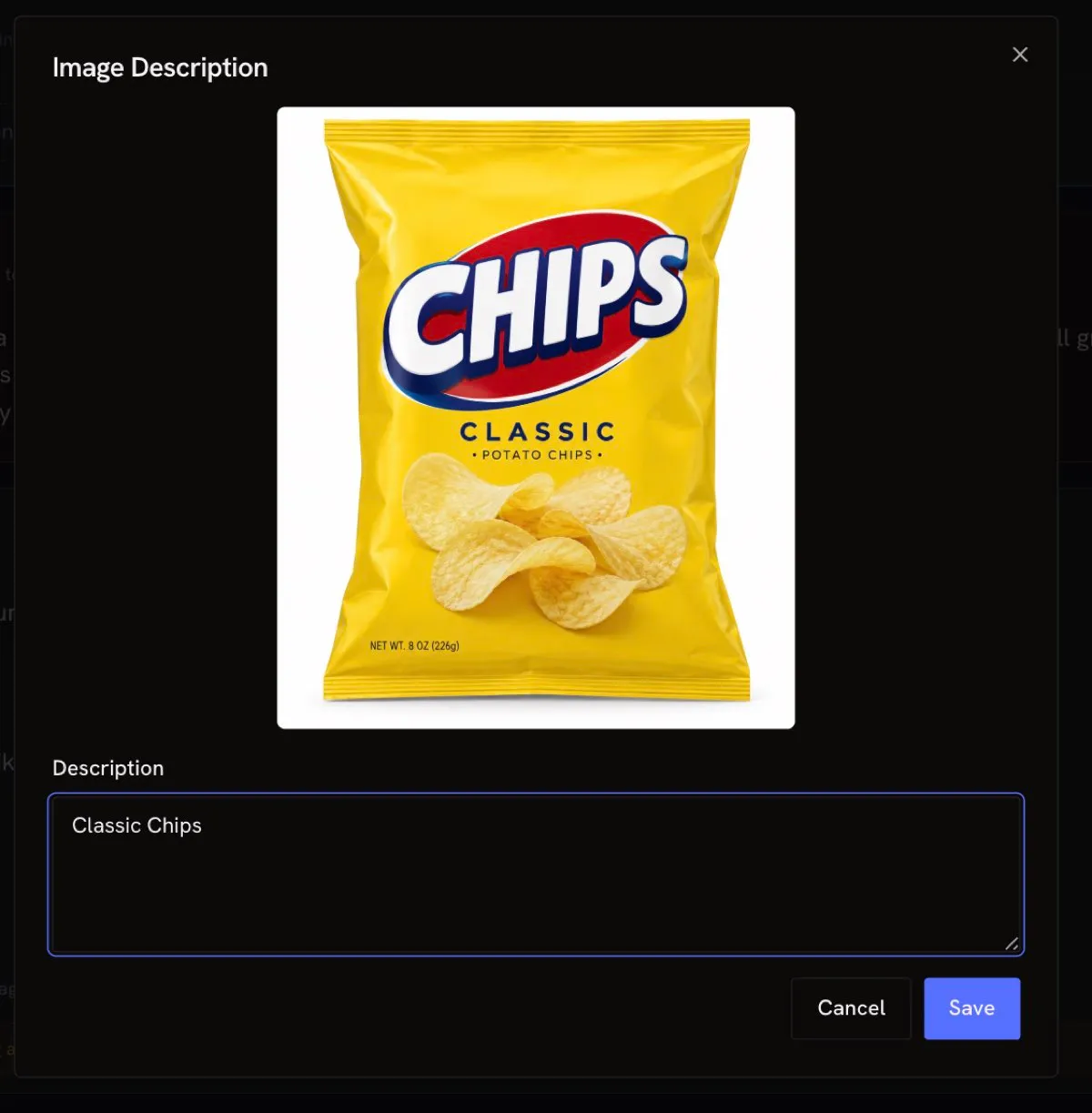
When adding images, always add an image description. This text is what the AI twins “see” — without it, the image may not be interpreted correctly.
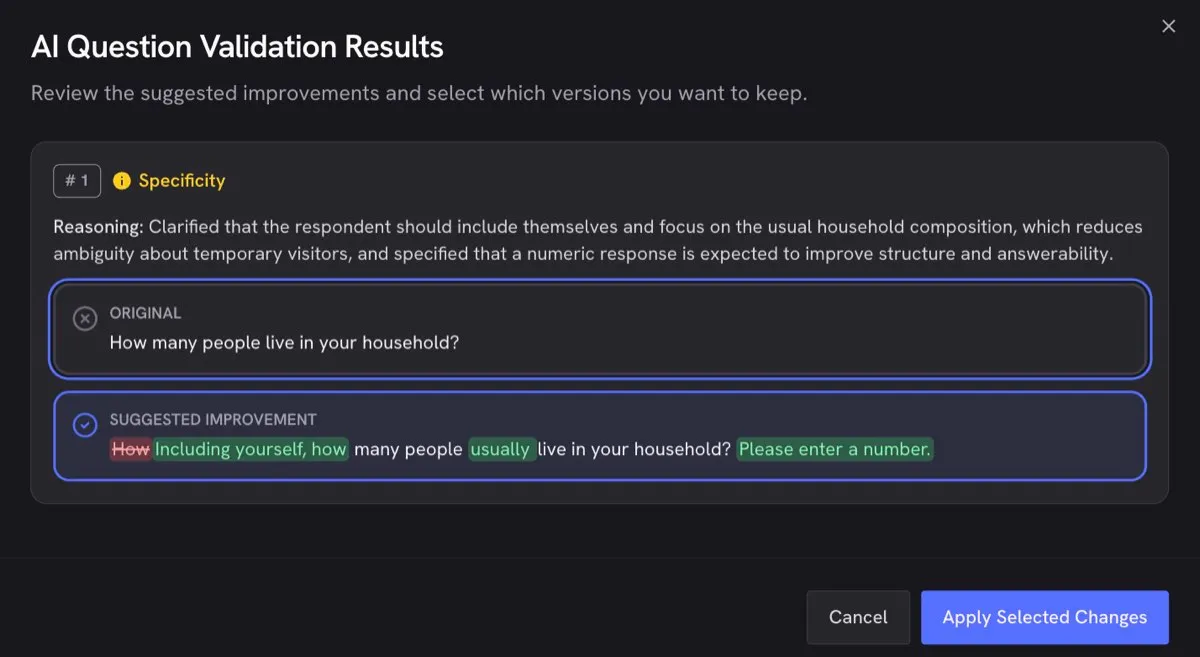
Select “Validate questions with AI” after creating all your questions. You can compare the original wording with the suggested improvement and choose which version to keep.